

Eid al-Fitr likely on March 20 in UAE as Ramadan to complete 30 days, says SAASST
Some countries may mark the festival a day later
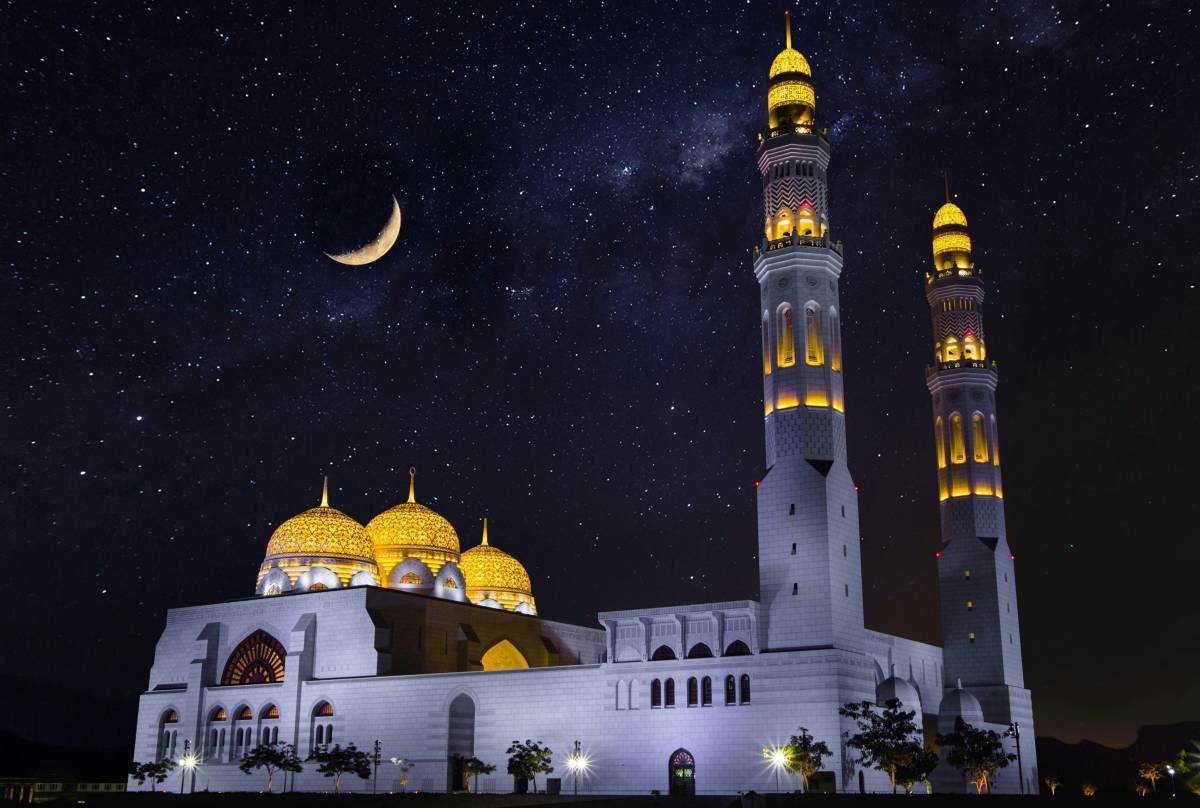
SHARJAH – Astronomical calculations indicate that Eid al-Fitr in the UAE is expected to fall on Friday, March 20, 2026, according to the Sharjah Academy for Astronomy, Space Sciences and Technology (SAASST).
The academy’s observatory announced that Ramadan is set to complete its full 30 days, with Thursday, March 19 marking the final day of the holy month.
The prediction is based on detailed astronomical analysis of the Shawwal crescent moon, conducted by the observatory in Sharjah. Scientists concluded that the conditions necessary to observe the crescent on the evening traditionally designated for moon sighting will not be favourable in the UAE.
Crescent timing
According to SAASST’s calculations, the new moon will not be visible on Wednesday, March 18, which corresponds to the 29th day of Ramadan and the usual eve for crescent observation.
On that evening, the moon will set before the sun in the western sky, making it impossible to sight the crescent. As a result, Ramadan is expected to extend to its full 30 days.
The observatory noted that the surface conjunction of the moon will occur above Sharjah at 4:24am UAE time on Thursday, March 19. Conjunction marks the moment when the moon aligns with the sun and Earth, signalling the beginning of a new lunar cycle.
Visibility factors
By sunset on March 19, the crescent moon will be approximately 14 hours and six minutes old. Its elongation from the sun will measure around 6.5 degrees, while its altitude above the western horizon will reach roughly six degrees.
The moon is expected to remain above the horizon for just 29 minutes after sunset. These parameters fall below the thresholds generally required for a reliable sighting.
Astronomers explained that such conditions make observing the crescent extremely difficult. Even with telescopes, the chances of detecting the moon are considered slim, while naked-eye visibility within the UAE is deemed impossible.
Global variations
Despite the challenging conditions locally, SAASST noted that crescent visibility could differ in other parts of the world due to geographical variations.
Some Arab and Muslim countries may still be able to sight the crescent either with telescopes or potentially with the naked eye if atmospheric and positional factors prove favourable in those regions.
Based on these calculations, SAASST indicated that, by astronomical assessment, Friday, March 20 will mark the first day of Shawwal and the celebration of Eid al-Fitr in the UAE and many other Islamic nations.
However, countries that began Ramadan on a different date may observe the festival later. In places where the holy month started on Thursday, February 19 rather than Wednesday as in the UAE, Eid al-Fitr could fall on Saturday, March 21 depending on moon sighting outcomes.